
Cart (0)
No products in the cart.

A box may look like the perfect size online, but will your product fit inside once you add protective packaging? And will the finished parcel match the dimensions you enter when booking a courier?
These questions involve two different measurements: internal dimensions and external dimensions.
Internal dimensions help you choose a box that fits your product. External dimensions help you understand the space your packed parcel occupies during shipping and storage.
Internal dimensions are the measurements of the usable space inside an assembled box. They tell you how much room is available for your product and any cushioning material.
Box sizes are commonly written as:
Length × Width × Height (L × W × H)
For example, if a box has internal dimensions of 9 × 6 × 3 inches, those measurements describe its inside space.
Many packaging suppliers list inside measurements, but buyers should always confirm the measurement basis on the specific product listing.
Use internal dimensions when checking whether a box can accommodate:
A product that measures exactly the same as the box’s internal dimensions may be difficult to insert or remove. Allow suitable clearance based on the product’s shape, fragility, and packing method.
External dimensions are the measurements across the outside of the assembled box.
They include the space occupied by the cardboard walls and folded construction. For a shipping parcel, measure the box after filling, closing, and sealing it.
External dimensions matter when:
FedEx advises measuring the outer dimensions after packaging is complete. Using the printed box size alone can give an inaccurate shipping measurement.
| Point of comparison | Internal dimensions | External dimensions |
|---|---|---|
| What they measure | Usable space inside the box | Overall size outside the box |
| Main purpose | Checking product fit | Shipping and storage planning |
| Cardboard thickness | Excluded from the inside space | Included in the overall size |
| When to check | Before choosing a box | After assembling and packing |
| Buyer’s key question | “Will my product fit comfortably?” | “How much space will this parcel occupy?” |
Corrugated cardboard has thickness. Folds, overlapping panels, and the box’s construction also affect its finished measurements.
For example, a self-lock mailer may have folded side walls that occupy more space than a single cardboard panel. A regular shipping box has a different flap and wall arrangement.
This means there is no single fixed allowance that you can add to every internal measurement to calculate the external size.
Do not assume that every 3-ply or 5-ply box has the same cardboard thickness. Check the actual assembled box when precise measurements matter.
Suppose your product measures 8 × 5 × 2 inches, and you are considering a box with confirmed internal dimensions of 9 × 6 × 3 inches.
The difference is one inch in each direction. If the product is centred, that leaves approximately half an inch on each opposing side.
That space may accommodate cushioning, but the final fit depends on how thickly you wrap the item and whether you add inserts or accessories.
Before placing a bulk order:
A listed 9 × 6 × 3 inch size should not automatically be entered as the courier parcel size.
Assemble the box in its normal shape before measuring.
For mailer boxes, check whether folded panels or inserts reduce the usable space near the sides. Make sure your product does not prevent the lid from closing properly.
Avoid using the size of the flat cardboard sheet as the finished box measurement.
Fill, close, and seal the box as you would for dispatch.
Measure the outside length, width, and height at the furthest points. Include any bulging or protruding packaging rather than measuring only an empty box.
Use a straight ruler or measuring tape, keep the units consistent, and follow your courier’s rules for rounding and dimension order.
Correct measurements help reduce the risk of additional charges when a courier remeasures the parcel.
Couriers may consider both actual weight and volumetric weight when calculating charges.
Volumetric weight reflects how much space a parcel occupies. Its calculation uses the parcel’s external length, width, and height, together with a divisor specified by the courier or service.
A large box containing a lightweight product can therefore cost more to ship than its actual weight suggests. FedEx, for example, explains that dimensional weight can determine the charge when it exceeds actual weight.
Choosing a suitably sized box can reduce unnecessary empty space while still leaving enough room for protection.
Measure the product with its retail packaging and planned cushioning. These can change the space required.
Read the product details and confirm whether the dimensions are internal, external, or nominal.
A very tight fit can make packing difficult and put pressure on the walls or closure.
Measure the actual packed and sealed parcel before entering shipping dimensions.
A sample test can help you confirm product fit, closure, and packing convenience before a larger purchase.
Before buying corrugated boxes or mailer boxes, confirm:
When enquiring about packaging from MM WILL CARE, share your product measurements, intended packing material, and preferred box style. Confirm the measurement basis for the selected box before placing your order.
Explore packaging options at www.mmwillcare.com.
Frequently Asked Questions
No. Many suppliers use internal dimensions, but listing practices vary. Confirm the measurements for the specific box you plan to buy.
Use the internal dimensions and account for cushioning, inserts, retail packaging, and suitable clearance.
Use the external dimensions of the fully packed, closed, and sealed parcel. Follow the courier’s measurement and rounding instructions.
A fixed allowance is not reliable for every box. Board thickness, folds, and construction affect the difference. Measure a sample or obtain confirmed external measurements from the supplier.
Choose a box that fits the packed product comfortably and provides suitable protection. A box that is too tight may be just as unsuitable as one with excessive empty space.
Share:
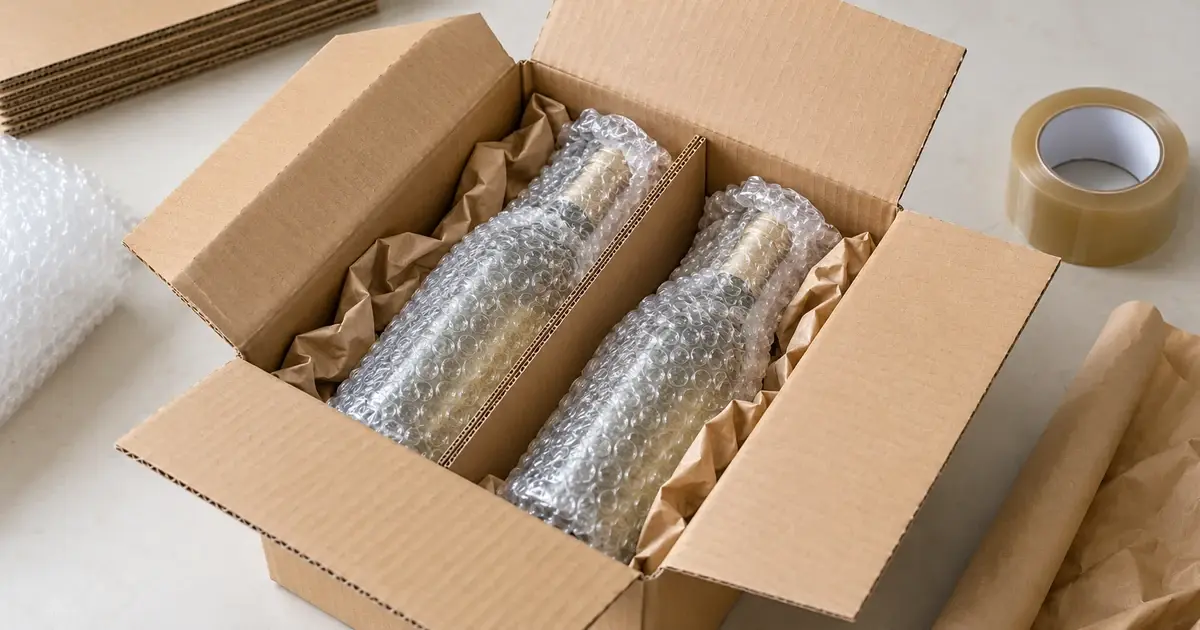
Learn how to wrap, cushion, separate and seal glass bottles so they are better protected during courier shipping. This s...
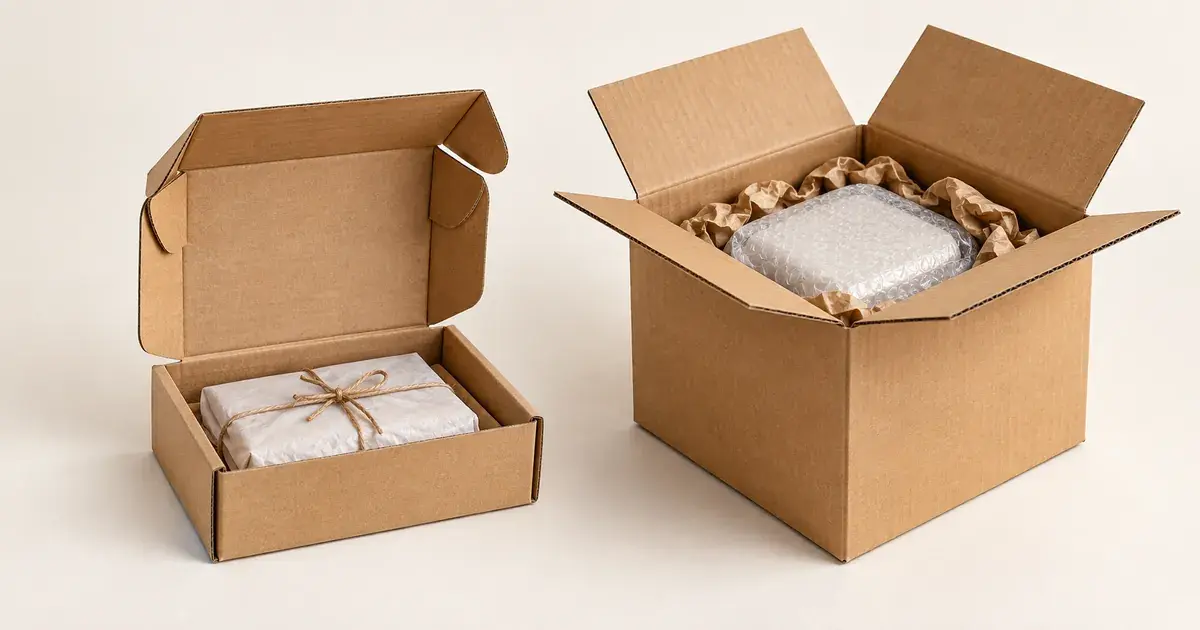
Choosing between a self-lock mailer box and a regular shipping box? Learn how each works, where each fits best, and what...
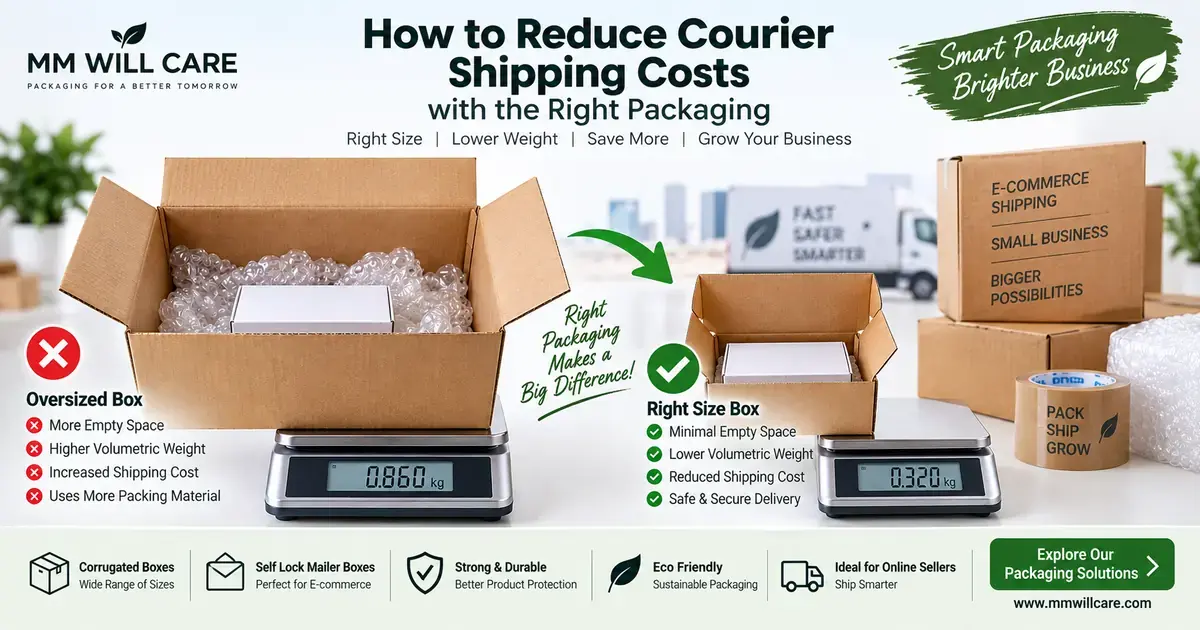
Courier charges can significantly affect the profitability of an e-commerce business. Choosing the right packaging size,...

Choosing a corrugated box affects how well your product travels, how much packaging you use, and your overall shipping c...